
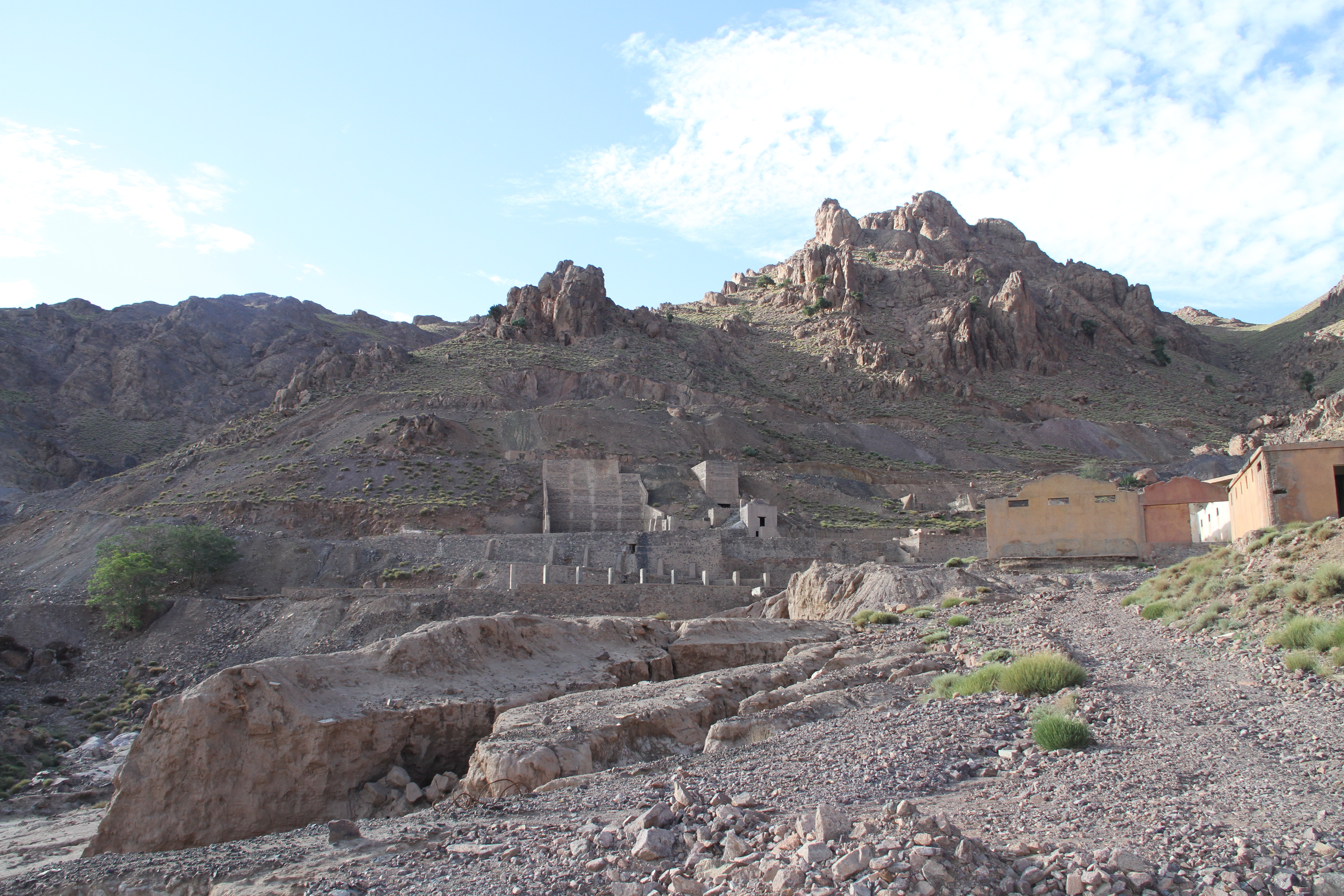
I leave la boutique, the disbanded mining town, and my friend to continue my way north.
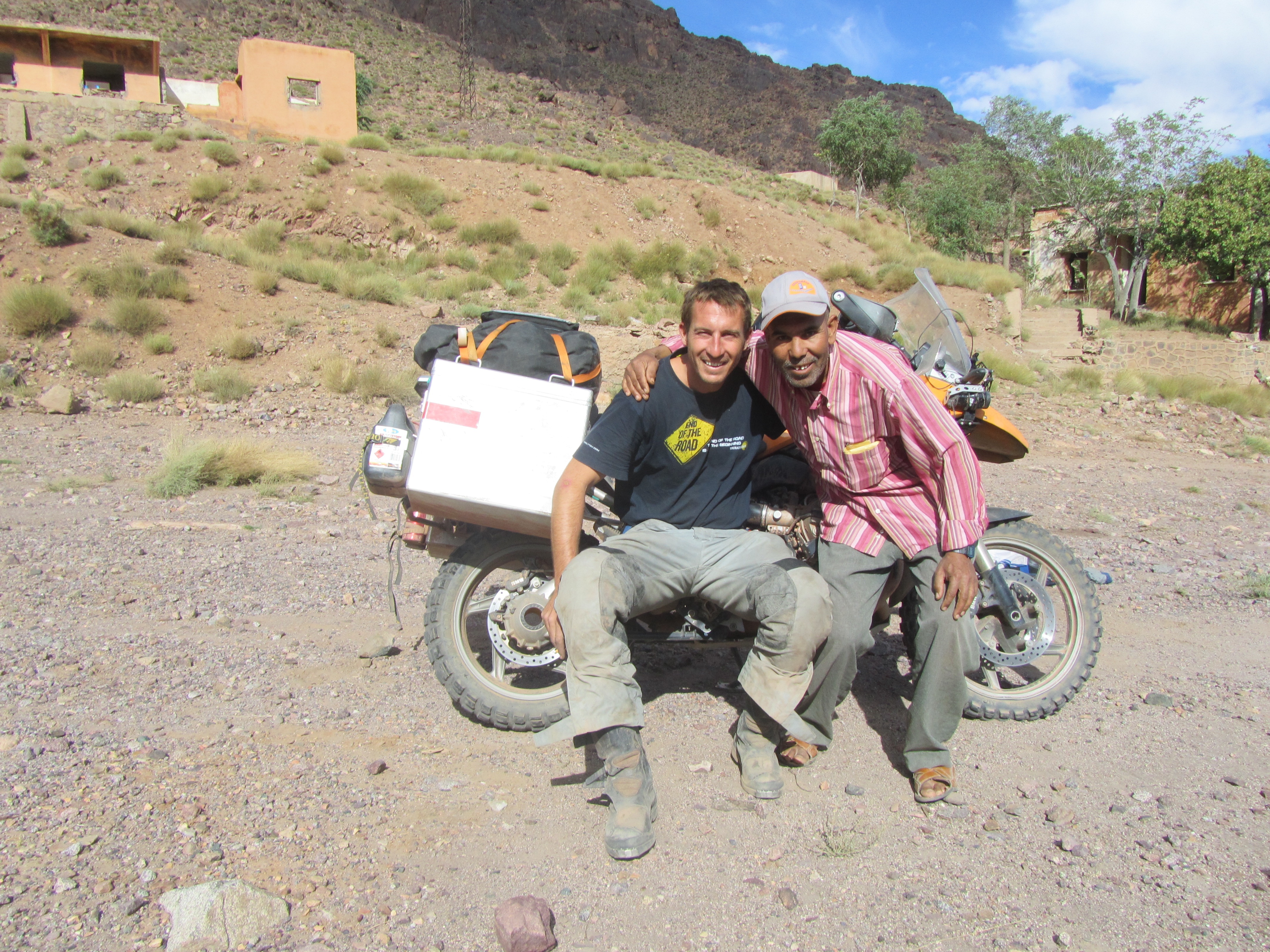
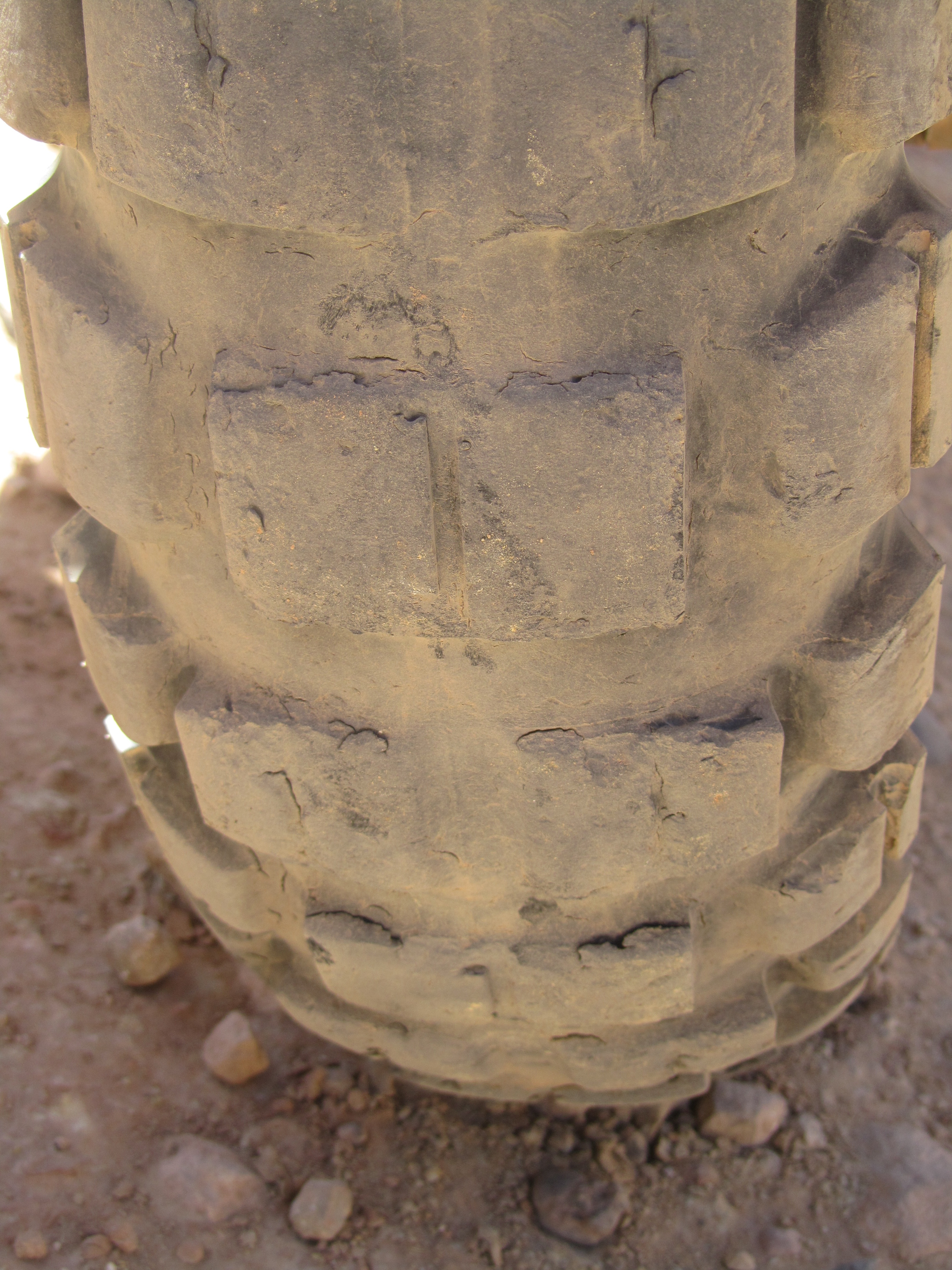
The most efficient way to clean your bike is to sandblast the rough mud in the desert, and to wash off the dust in rivers. That was what today was all about. The plan was to set off after breakfast with my friends from La Boutique and to return to Marrakech to leave a day available before the flight back to organize a new rear tyre as the current tyre is shredded, and to arrange the necessary with the customs authorities to be able to leave the bike in Morocco for a month. But the plan did not materialize at all, enshallah, and that is always best.
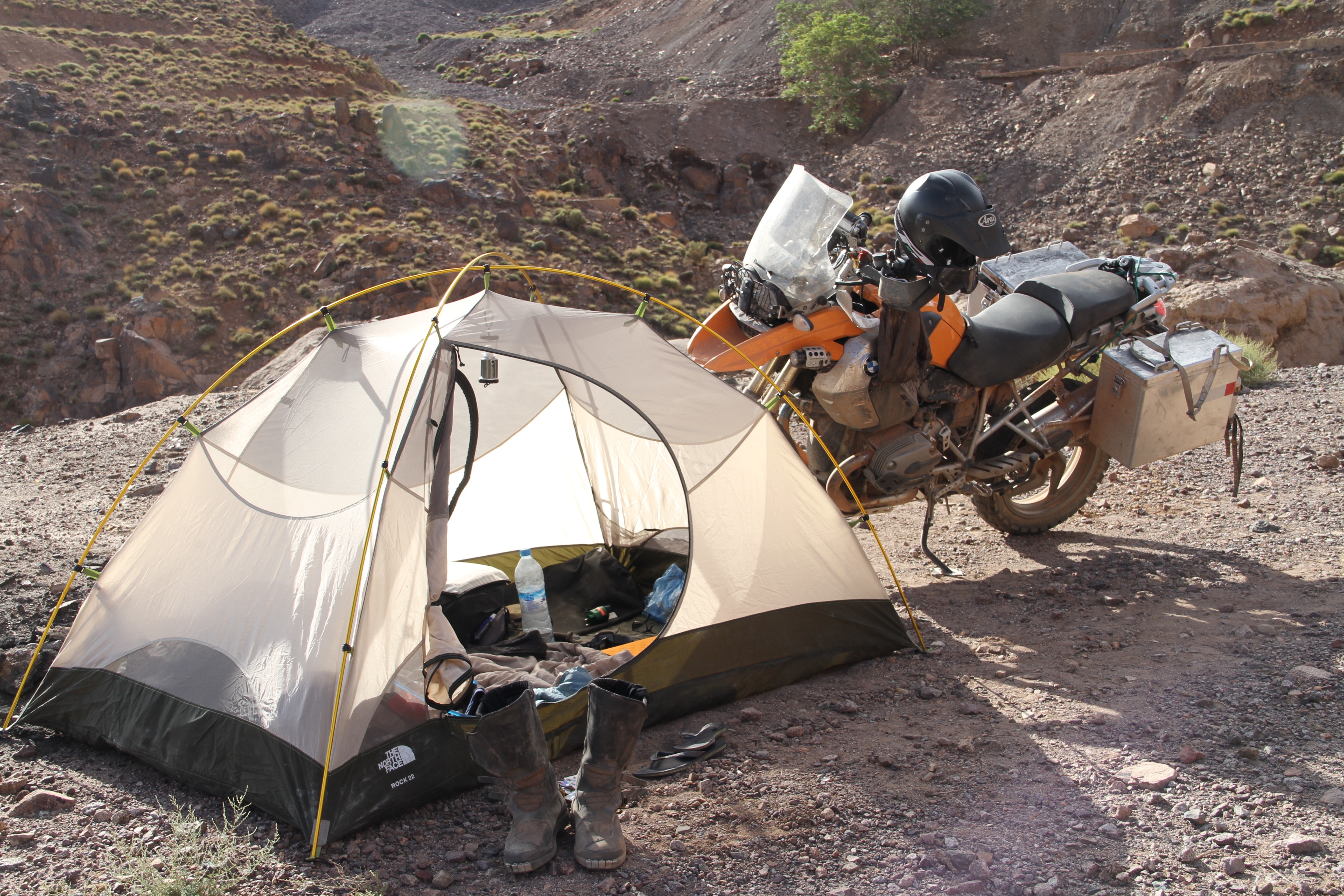
After a brief pause in Boumaine Dades, I decide to travel a Northern route via Bou-Thrarar to El-Had. The first piste between Äit-Youl and Bou-Thrarar leads from the Qued Dades to the Asif M’Goun, both two large rivers cutting their path through the mountains, leaving deep and steep gorges and fertile soil for the inhabitants of their valleys. You have to know that the route is there, since the start looks unobtrusive and there are no signposts. The piste is a wonderful drive, and I realize I must be on a lesser travelled but touristic road, judging by the amount of tourist 4×4’s coming my way. In Bou-Thrahar I stop by a river and immediately a guy starts talking to me in very good German. He is studying German in Agadir, and invites me for tea at his home. I have given him my number and Facebook details, but as of two days later he has not contacted me. After an interesting conversation I continue, and am again confirmed in my belief of the hospitality of the people.
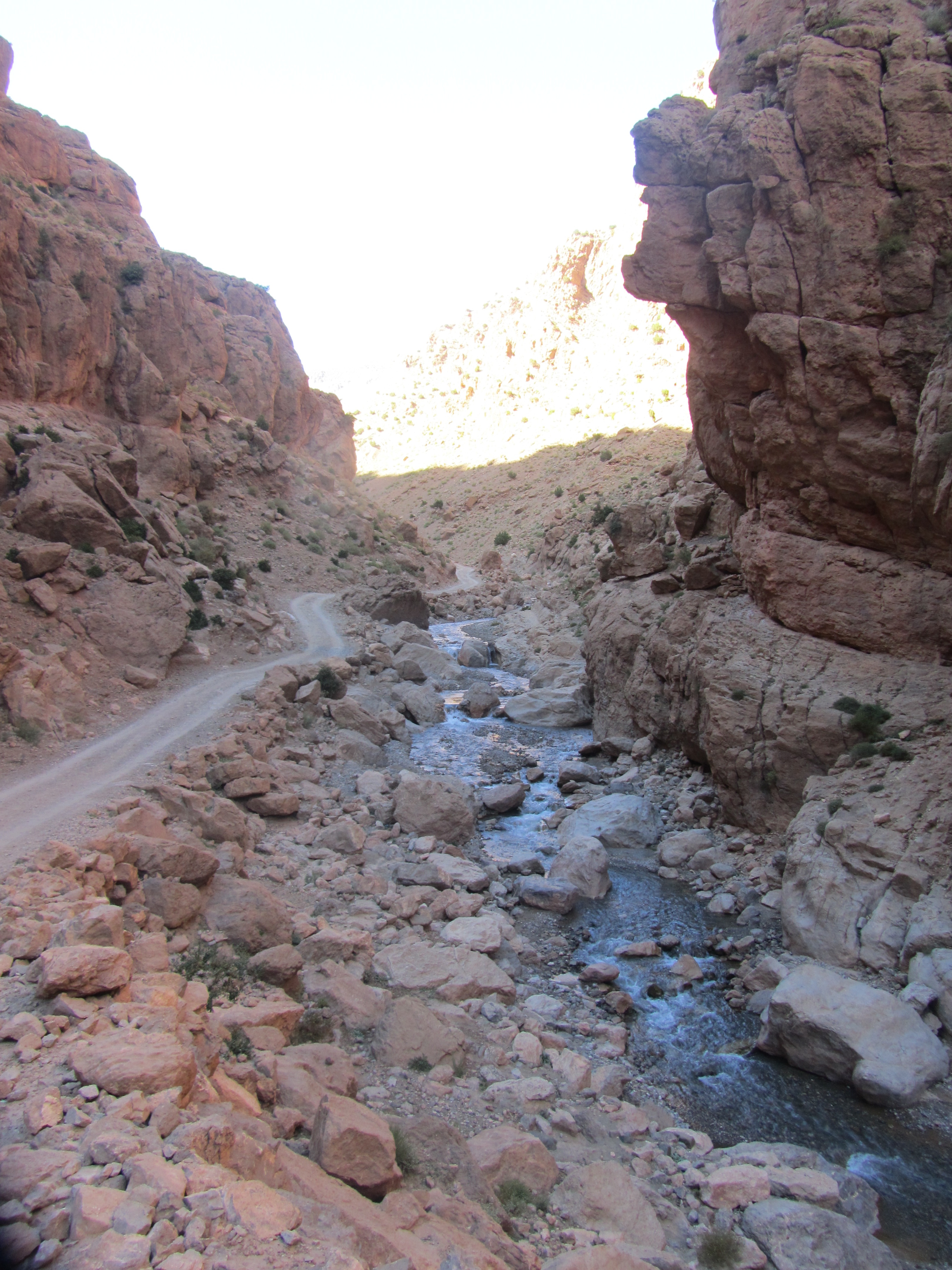
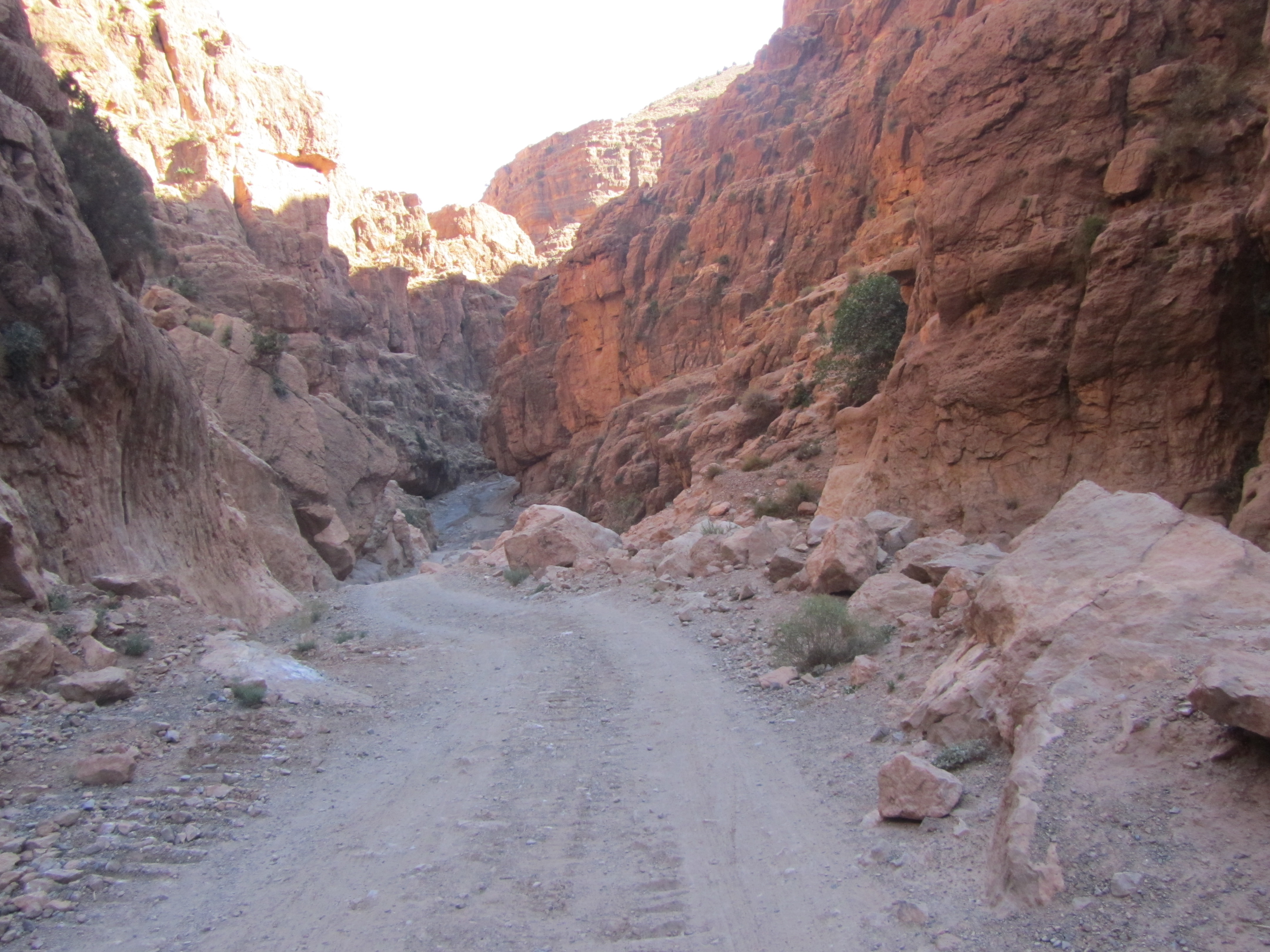
I continue north and a first wrong turn takes me into a river bed and the local kids indicate that the piste is forever down the river bed, so I continue before realising that I am falling victim to the local sport, leading people like me astray. I enjoy the many river crossings and on my return I try to traverse a steep drop and ascent, and on the ascent the lack of profile on the back tyre makes itself felt, and now I am stuck in the river – the thought of all my electronics makes me use full force to keep the bike from falling over. Again, entertainment for the locals, and they help me push the bike up the ascent, all in the water. One of the panniers got damaged during the fall on tar and is no longer watertight. But that does not matter, a little water between engine oil, dust, sand and bread. I return to the main road and at this point all navigation methods fail. The paper map says there is a road north through the Atlas, the GPS map not, and the first Morrocan GPS tells me there is a piste. So I go. I get treated the most beautiful gorge imaginable, only as broad as a single track, driving all along the river bed and into a green valley amongst the palmeraie. It proves the point that a) serendipity makes you discover the most beautiful areas, and b) they are not on maps and c) off road capability helps. I continue up the valley and up a very steep and tight scent up the mountain (Tizi-n Äit-Hamed). My back tyre has limited traction now and on the tight gravelly turns this is starting to become tight and somewhat risky, since mistakes on the steep mountain will be punished severely. Just over the pass I am stopped by a guy wanting a lift to his village. I tell him it is too dangerous on the bike. He invites me to the village to stay with him, but at the same time informs me that the maps indicate that there is a road, but in fact there is not, which is confirmed by a cross-reference (Morrocan GPS triangulation :-)) later on.
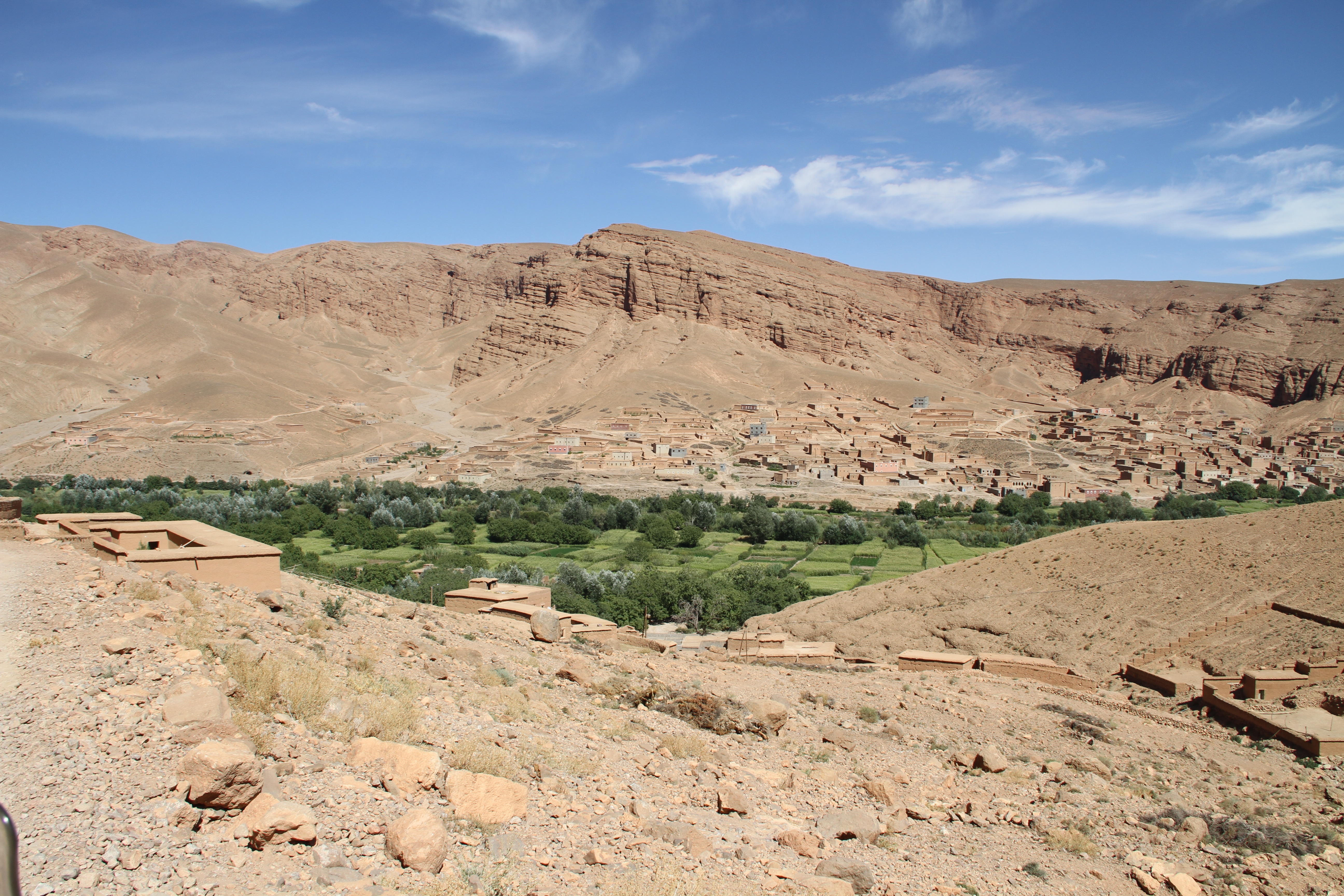
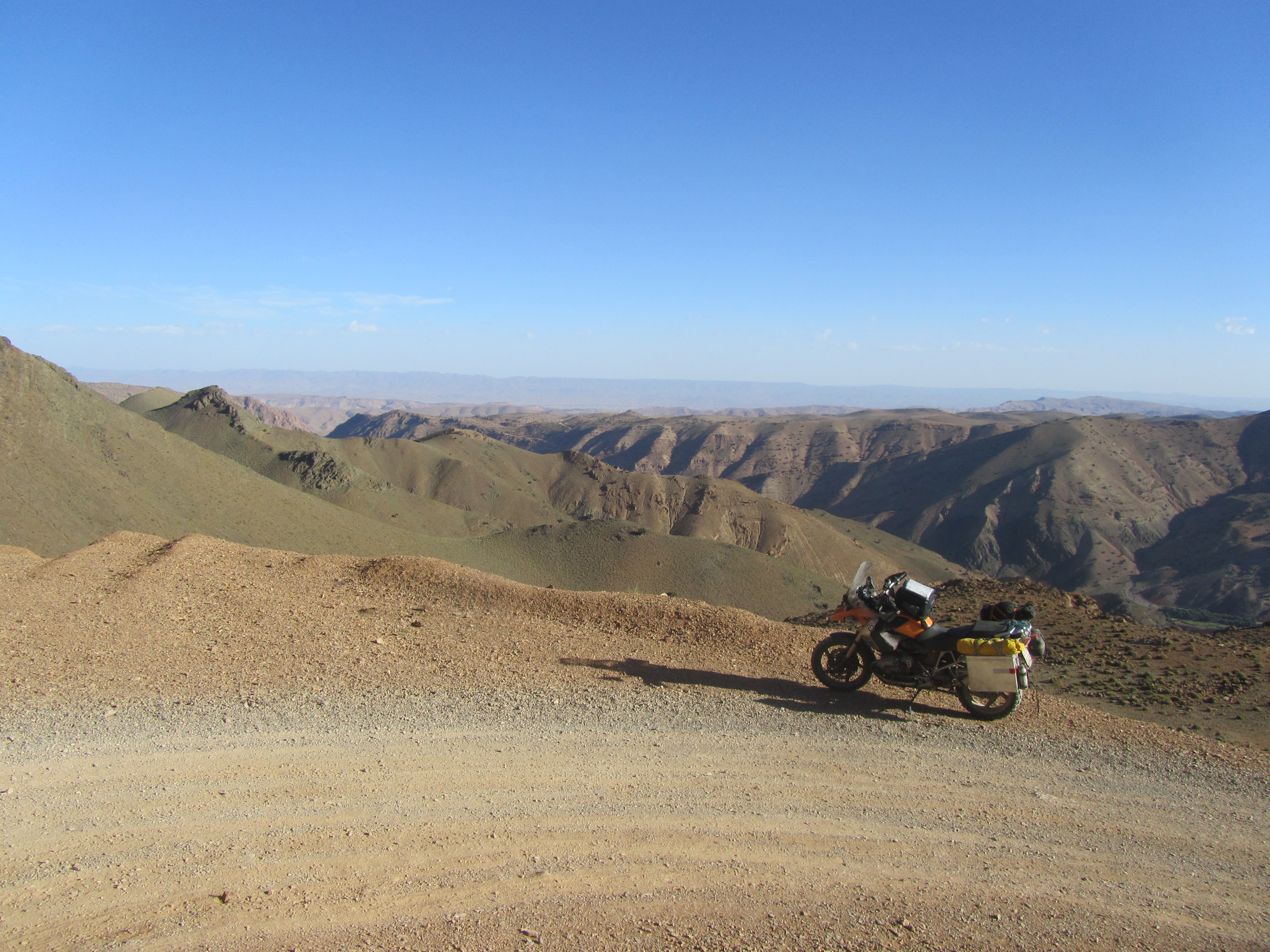 I turn around unwillingly, but I feel I need to get to Marrakech. As I finally get back down into the valley, dusk is setting in. During a smoke break two woman pass me, and invite me for tea with a sincere smile. I decide that Marrakesh is going to have to wait (rightly so since the Quarzazate – Marrakech pass is better done in daylight) and follow the woman.
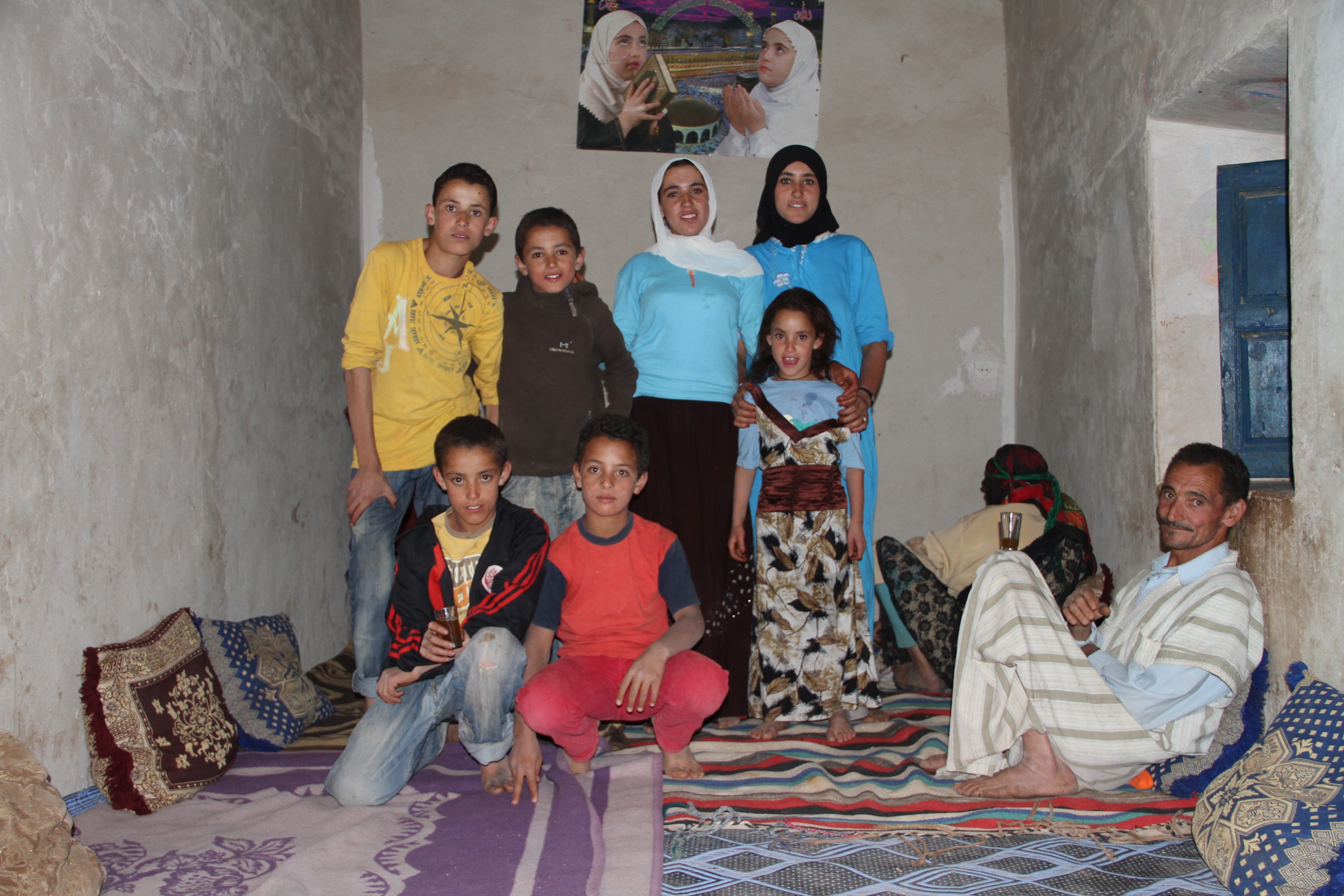
I am however stopped in the center of the little village for a chat, and as I continue I seem to have lost the women. I am stopped by some kids and had in fact driven right past the house. I am invited inside and one of the boys brings a tea can and a bowl for me to wash face, hands and feet. I am particularly happy to take my soaked boots off, the burn blisters still painful on my feet. I show the kids some pictures of the bike in the desert, and observe them interact with each other.
There is a toddler and each of the kids takes a turn carrying the child around. I notice they are extremely loving and gentle with the toddler and with each other. I struggle to understand the family relationships since it would seem the younger of the two woman is the mother of the toddler. Later on however the older lady breastfeeds the toddler, and at first the thought crosses my mind whether Berbers breastfeed from multiple mothers (as I have learnt that camels do). It turns out that the older lady is in fact the mother of all of them, the younger woman is the eldest of 8 children. She is 21 it turns out, and the youngest child about 1. That is a long time to be bearing children… I wonder if it really is for a lack of contraceptives.
In my life most women that I have met with many children somehow have seemed the more content. After tea with bread and self made honey and palm oil they offer for me to stay, and I gladly accept. The boys take me for a small tour around the mountain ridge and teach me the different herbs they have in their garden. They warn me of the kicking donkey and prove their warning to me. However, with a bit of effort also the donkey calms down and instead of biting me snipes at one of the boys. For all the talk of slow life and bio-food, here you have it. Was all the “progress” of the the last 200 years in fact regress? See also the movies „The Gods must be crazy“ – especially 1, shot in the Kalahari.
Eventually I meet the father who is a tranquil distinguished soul. Him and I smoke the occasional cigarette together and also he explains the herbs to me that grow in a little garden inside the house which is arranged as a square with the garden in the middle, and now also my bike. Another room is the wood burning kitchen, the women of the house have been preparing conscientiously for winter, there is a large supply of wood. Another houses a sheep and a goat, separated from others outside. I can only assume this is for reasons of fresh milk.
This family is wealthier than my previous encounter. The family is larger, they live in a larger house, have electricity, and television with satellite (compulsory for any respectable Moroccan family) and water in a reservoir on the mountain above. I see no scooter, only the donkey. The kids eventually want photos taken, and only grandmother and mother are camera-shy.
Eventually we have dinner, couscous with herbs and goat meat. I notice the large portion of meat I am being offered compared to the others, and I also notice how they offer each other their own portions. It is beautiful to watch this family interact.
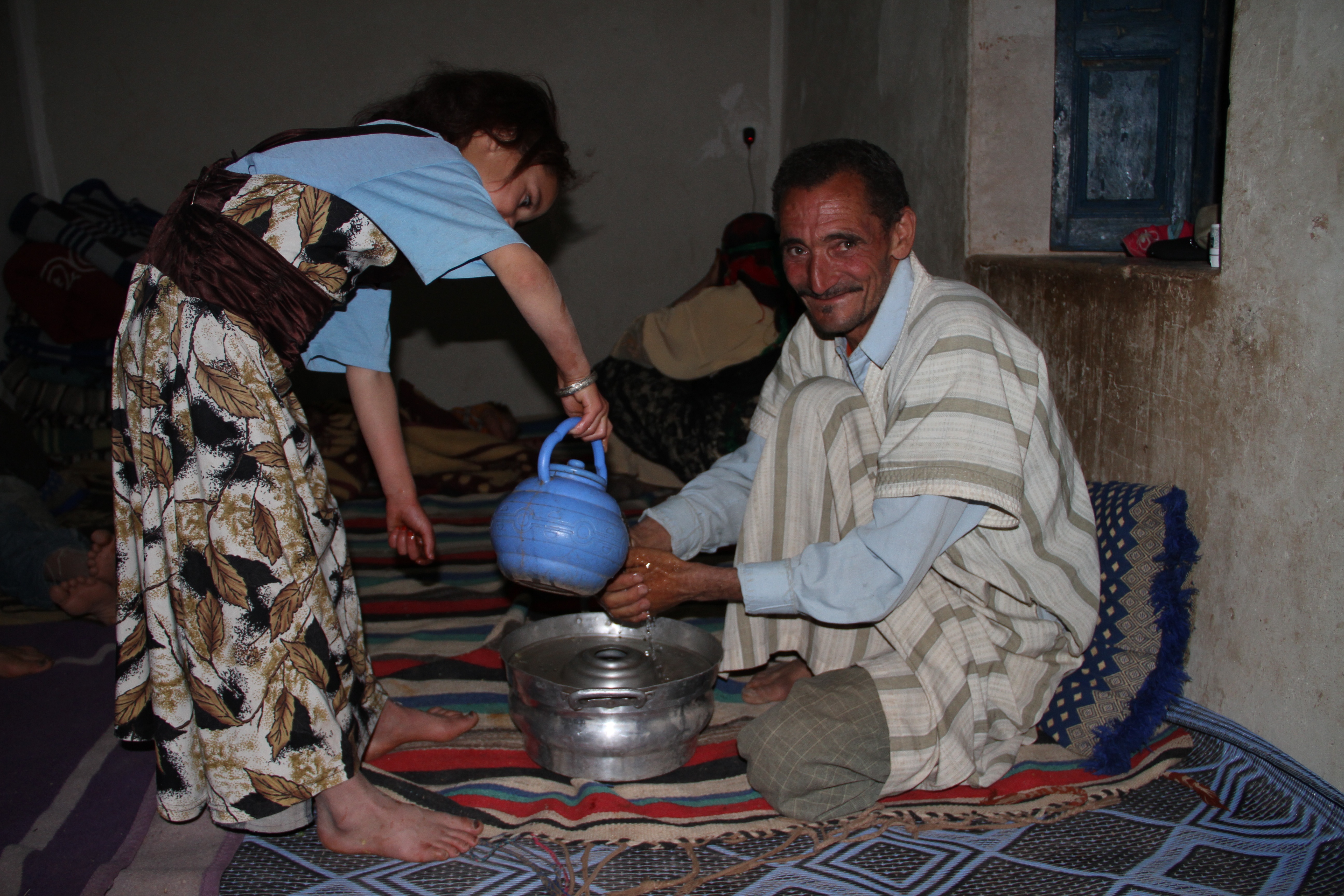
Another ritual that is wonderful to watch how always a different kid takes the tea can before and after dinner around the entire family to wash hands. Furthermore, the kids eat with spoons, the adults with their hands. The world is inverted. The lounge turned dining room now turns into a bedroom and I am offered a corner place. The kids are very attentive and one covers the camera with a cloth. Some of the family sleeps here, some of the family in another room. The covers seem to have fleas but once I learn to ignore the itching I fall into peaceful sleep to the thought how much happier I am having partaken in this hospitality rather than a hotel night in Marrakech.
 Volker Stinnes